
Caregiver Grief
No, not how you feel about them...

How you feel about you. I want to talk a little bit about grieving the loss of a life once planned for and dreamed of. The loss of daily rituals like going for a cup of coffee with a friend or running down to the library or café to do a little work. The absence of “date nights” with your partner or Sunday dinner with your family. The disappearance of a retirement plan—or bank account. That loss. That grief.
The one that gets swept aside because of the gargantuan task of caregiving and its labyrinthine jumble of expectations, responsibility and exhaustion. Caregiver grief is typically identified as the anticipatory grief we feel as we care for, witness the decline of and await the death of a loved one. They were reliable dads or miserable ones. Vibrant daughters or crazy-ass sisters. Loving moms or resentfully angry moms.
But what about the grief for our own lost lives? Because of a choice we made ourselves or one that was made for us? In my experience this is a real both-are-true situation, but understanding and acknowledgment for what a caregiver has lost (besides their loved one) rarely finds a sympathetic ear. The focus of understanding for the caregiver is for their current responsibilities and the almost urgent nature of the job. I think people are uncomfortable with what a caregiver has lost, because it feels like maybe someone is feeling a little sorry for oneself? It’s like, “well, it’s your (mom, dad, sister, wife) who else would care for them?” or the always insufferable “They took care of you, blah, blah, blah.” There’s a little bit of shame and guilt attached to feeling compassion for caregiver grief, isn’t there? From the outside and from ourselves.
In the book I published about my own caregiving experience, I use the word “grief” only 13 times and even though I was living it—and acknowledging it—it was in reference to all the other griefs that show up in caregiving. It was theoretical or applied or past grief.
I didn’t once mention “anticipatory grief”—and I referred to the loss of my future with the word resentment at least 5 times, but I never called it grief. When, in fact, it was.
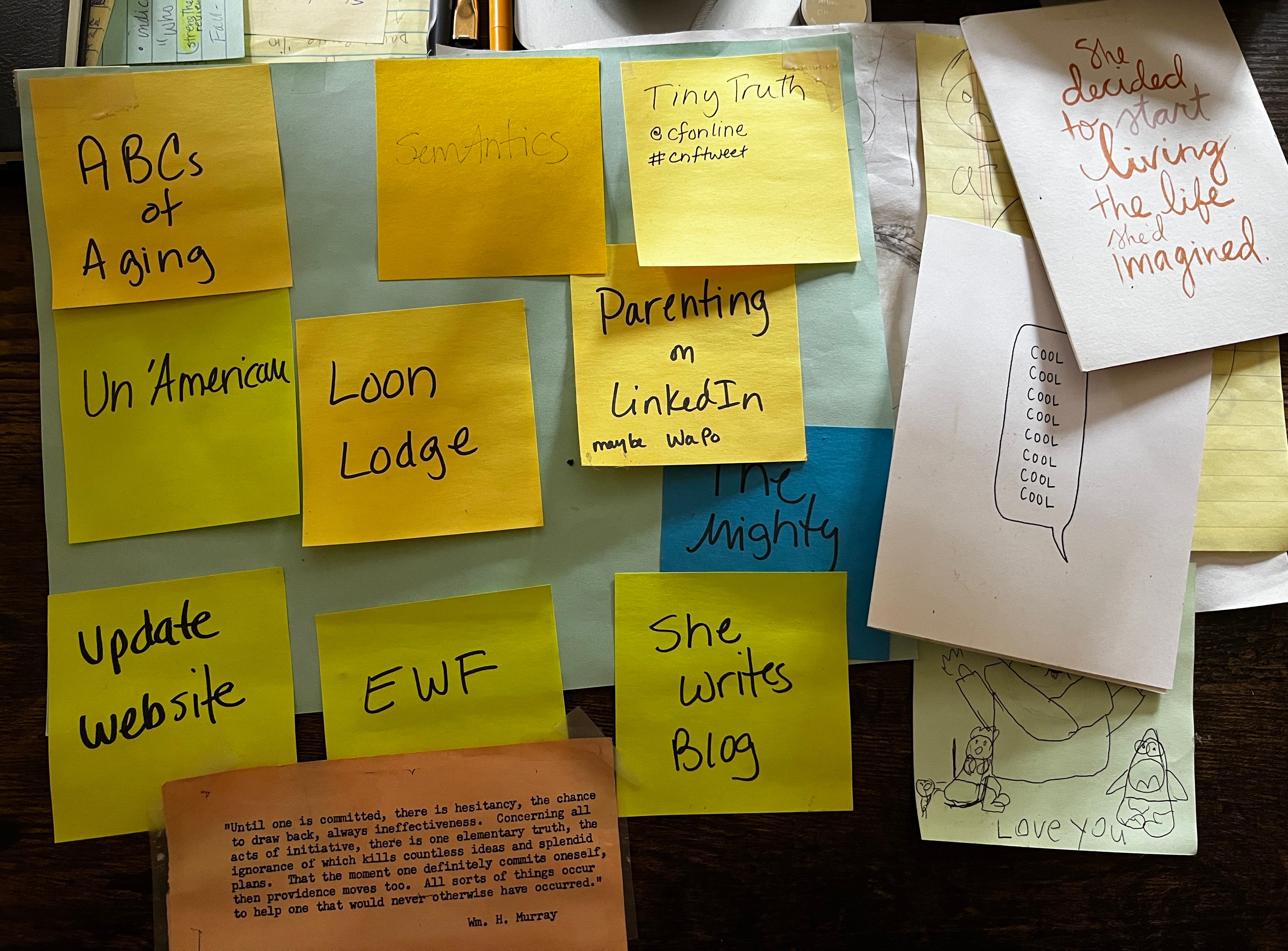
The following should have been a chapter in the book, but which for some reason was not included. I referred to it a couple of essays back, in The Littlest Caregiver. I share it again because it was the “pitch” I used to get the interest of a publisher. I didn’t recall until I went looking for it that it actually does describe in part the grief and loss that came along with the responsibility.
Book Synopsis
“Didn’t anyone tell you it was going to be a full-time job?” -scheduling nurse at yet another doctor’s office to make an appointment for my dad.
And so begins a four-year journey into caregiving for Cindy Eastman and her family in their home. No, no one had told her it would be a full-time job, even though she armed herself with all sorts of books, websites and articles, not once did anyone ever say it was going to be a full-time job. Or rather, her full-time job.
The paradox of caregiving for an elder family member in one’s home is this: Even though Cindy recommends against it, she is still glad she did it. She had two revelations during her experience: one--they didn’t have her dad come live with them as much as they now lived with her dad in their home. And two—her caregiving experience exposed parts of her that weren’t always pleasant to confront. For example, when she discovered she was “acting out” by way of an observation by her then 6-year-old grandson. One day, after picking up Luca from summer camp, as they did every day for several weeks during school vacation, she was herding everyone in through the kitchen door, when her dad stopped or slowed down or asked about something...it could have been anything. She doesn’t remember exactly what her response was, but she remembers Luca’s. He looked right up at her with concern in his eyes and asked, “Are you mad at Papa?”
The essays in this book record all of it—the gratitude, the resentment and the grief. They are organized in Before, During and After sections. The first section introduces Cindy’s Dad Warren before effects of 40 years of Type 1 diabetes, blindness and approaching dementia directed his behavior. Before that, “ . . . there he was, all the time. Responsible, reliable, strong, smart.” She covers the relationships with her siblings, her husband, her children, and even her cat in all the ways that they benefited and suffered from the responsibility of caring for her dad.
Suffering is a part of caregiving. And not because someone isn’t doing it right. Everyone does the best they can, both the caregiver and caregivee. It isn’t the noble, martyred job that it’s cracked up to be and I feel it’s important for people to know that. Not to stop doing it, but to do it better and with more support.
As one would expect for anyone who grieves.
(Please know I understand that there are many caregiving experiences that are just wonderful and if that is yours, then you’re lucky. For those who have a different experience, this is for you—you’re doing a great job. xo)
Other ways to support the arts (Me, I’m the arts I’m talking about . . .)
Cindy, it is very interesting that the loss of the caregivers life is not often discussed. I imagine that part has to be kept as quiet as possible so people take on the role of family Caregiver'. We talk constantly about what the patient loses, but there is an unspoken, secondary grief for the caregiver's own upended life, plans, and identity. It is a massive piece of invisible scaffolding holding things together, yet the cost to the person providing it is so often met with silence. Thank you for shining a light on the parts of this journey that aren't in any manual.
Great article! Appreciate you bringing up this idea that we shouldn't suffer in silence or feel shame or resentment when caregiving completely changes the life we thought we would have.
It's like a long swerve in your path. What you pick up along the way will hopefully lead you to where you always planned to be, but there are many bumps and turn backs and broken GPS directions.